
hegemony
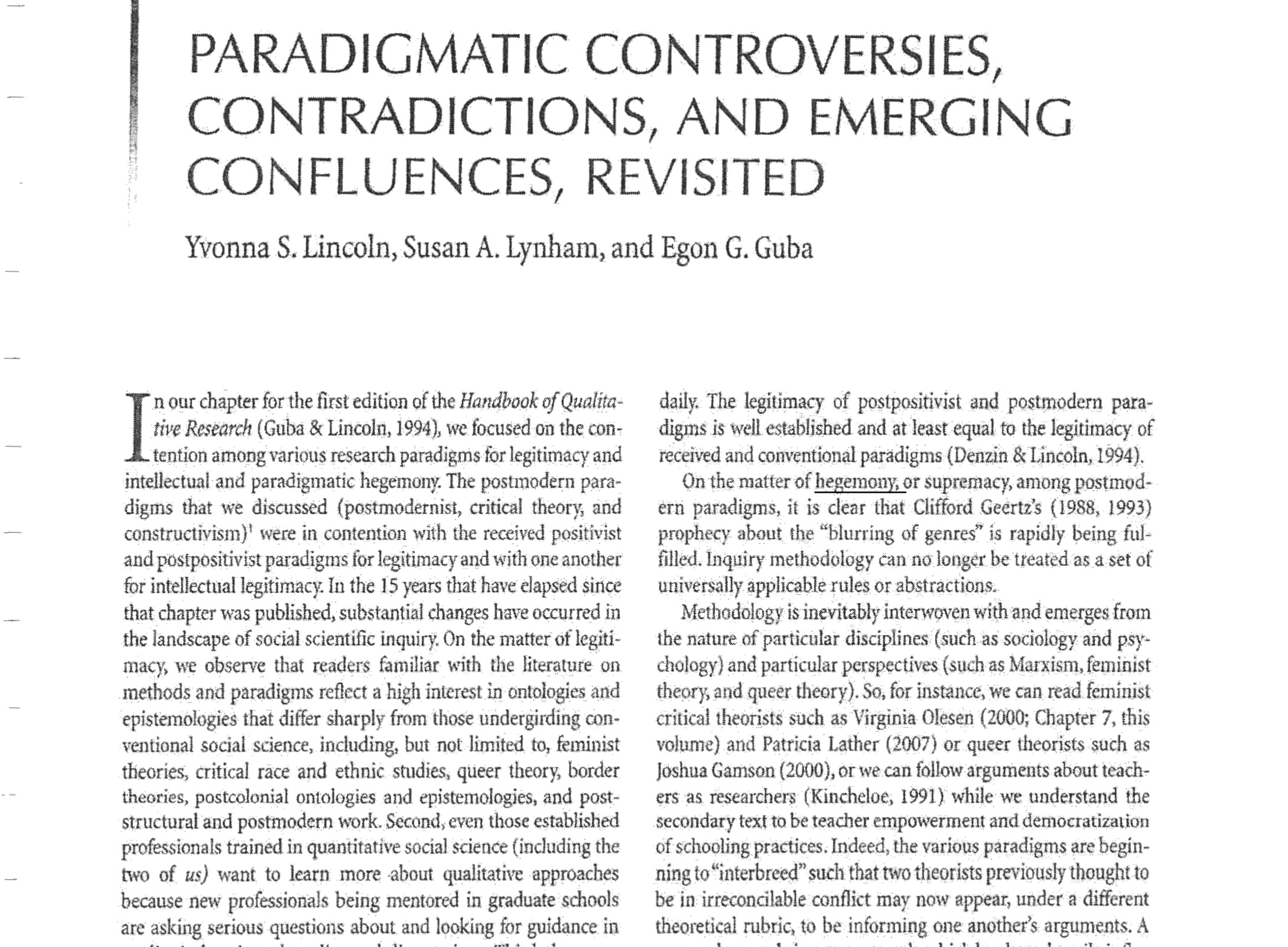
While reading Lincoln, Lynham, and Guba (2011), I came across hegemony as a new word. Discussion about oppression and power is important to have. Several of my readings today are about decentralizing western culture.
hegemony
Noun
- the dominance or leadership of one social group or nation over others; “the hegemony of a single member state is not incompatible with a genuine confederation”; “to say they have priority is not to say they have complete hegemony”; “the consolidation of the United States’ hegemony over a new international economic system”
- Less specific
- political system
- form of government
- Less specific
There are 163 definitions in the project. Most definitions were taken from Terminology app, which is based on the Princeton University's WordNet lexical database. The following is a listing of all of the terms included.
Dictionary Entry Information
Added to Project:
Reference Author: Lincoln, Lynham, and Guba (2011)
Reference Citation:
Lincoln, Y. S., Lynham, S. A., & Guba, E. G. (2011). 6 - Paradigmatic controversies, contradictions, and emerging confluences, revisited. In N. K. Denzin & Y. S. Lincoln (Eds.), The Sage handbook of qualitative research (4th ed, pp. 97-128). Thousand Oaks: Sage.
Share This